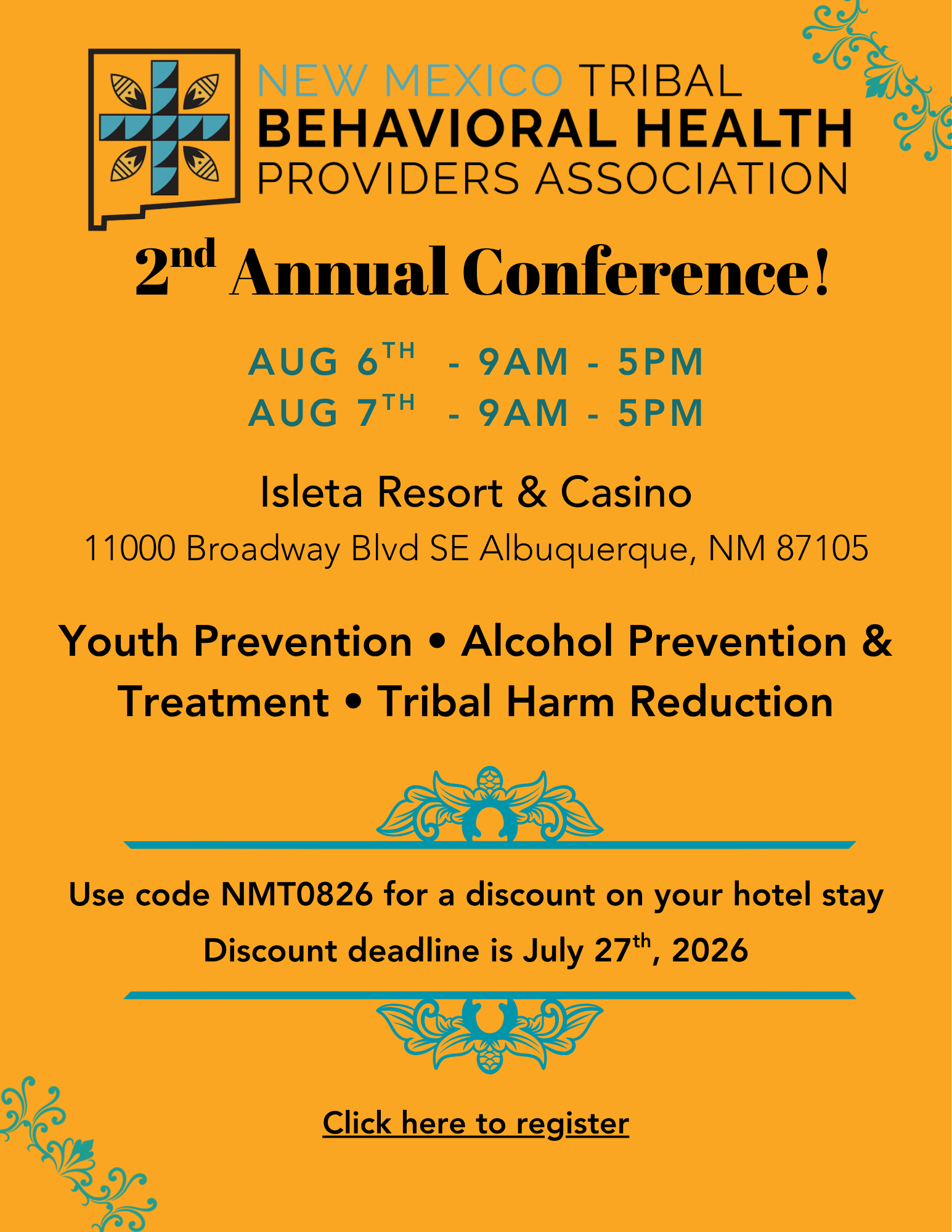
- FUNDED BY VITAL STRATEGIES
Tribal Harm Reduction
Meeting our relatives where they are — honoring compassion, respect, and community care as we respond to the overdose crisis in Native New Mexico.
“Harm reduction is not new to our people. Our ancestors have always practiced ways of keeping one another safe — this work simply carries that forward.”
Explore Tribal Harm Reduction
Explore culturally grounded harm reduction information, overdose prevention guidance, community programs, training materials, and practical resources designed to support Native communities across New Mexico.
What Is Harm Reduction
Meets people where they are
No judgment, no ultimatums — support starts wherever a person is.
Treats people with dignity
Every relative deserves respect and safety, regardless of substance use.
Encourages connection
Isolation increases risk; relationship and community increase safety.
Honors culture & identity
For our communities, harm reduction and culture strengthen each other.
Reduces shame and stigma
Stigma keeps people from asking for help. This removes that barrier.
Supports safer choices
Practical tools and info help people reduce risk in the moment.
Naloxone (Narcan)
Content adapted from the IHS HOPE Committee’s “Keep the Circle Strong” training (incl. Navajo-language framing).
What is naloxone?
A life-saving medication that temporarily reverses an opioid overdose. Usually given as a nasal spray. Works on any opioid — prescription pain medication, heroin, or fentanyl. Safe to give even if you’re unsure an overdose is occurring. Effects last 30–90 minutes.
Why everyone should learn it
In nearly 4 of 10 overdose deaths, another person was present. Anyone can witness one — an elder on high-dose pain medication, a curious child, a person newly out of treatment. Carrying naloxone means a relative gets a second chance.
Recognizing & responding: 3 steps
1
1
Recognize the signs
Slow/no breathing, blue-tinged lips, limpness, gurgling, unresponsive.
2
2
Call 911 immediately
Naloxone buys time — it doesn’t replace emergency care.
3
3
Give naloxone & support breathing
Give the nasal spray; monitor; repeat dose if no response in 2–3 min.
Naloxone: Myths & Access
Myths, debunked
Myth
- Giving naloxone will make things worse if I’m wrong.
- Having naloxone around encourages drug use.
- Only medical staff can give naloxone
Fact
- It has no effect on someone not overdosing — safe to give when in doubt.
- Evidence shows the opposite — access connects people to care.
- Community members, family, and peers give it successfully every day.
Beyond Naloxone
Programs across New Mexico pair overdose prevention with everyday practical supports.
Fentanyl & xylazine test strips
Low-cost tools to check what’s actually in a substance before using.
Wound care kits
Safer-use supplies
Peer support & outreach
Connection to treatment
988 & crisis support
Suicide & crisis lifeline resources, paired with harm reduction messaging.
Cultural Healing & Traditional Practices
The Cornstalk of Life
Developed by the McKinley County Early Childhood Coalition during a GONA (Gathering of Native Americans) harm reduction event. Works like a “River of Life” exercise, mapped onto a cornstalk:
- Roots — community strengths
- Leaves — supports or needs
- Corn — impact of those strengths
- Corn pollen — rewards and accomplishments
Suggested treatment: illustrated cornstalk graphic with labeled callouts (source image available).
Community Round Tables
The Mountain Center Española’s Corn Pollen Project hosts round tables bringing harm reduction, behavioral health, EMS, elders, and community partners together in-circle — honoring the belief that every voice matters.
Meals, shared reflection, and space for both celebration and honest struggle are treated as essential, not extra. Meals, shared reflection, and space for both celebration and honest struggle are treated as essential, not extra.
Suggested treatment: photo of a gathering (if available) + pull-quote styling.
Working in Tribal Communities as a Non-Native Ally
Adapted from guidelines shared by Nihi K’é Bá for non-Indigenous allies/accomplices.
Acknowledge the land
Know whose land you’re on and the history of colonization at play.
Solidarity, not saviorism
You’re joining an existing fight — not rescuing anyone.
Every nation is different
“Indigenous” isn’t one culture; approach each community’s traditions with humility.
Support, don’t direct
Offer skills/resources in service of Indigenous-led vision.
Listen more than you speak
Prioritize community voices over assumptions made on their behalf.
Honor cultural protocols
Follow community lead on ceremonies; never photograph without consent.
Tribal Harm Reduction Programs in New Mexico
- Pueblo of Pojoaque
Foster Parent Resource Program (ROAD Program)
Kinship/foster caregiver training + harm reduction resource baskets (Narcan, wound kits, test strips).
- Española
The Mountain Center — Corn Pollen Project
Community round tables connecting harm reduction and cultural partners statewide.
- McKinley County
Early Childhood Coalition
Developed the Cornstalk of Life tool during a GONA harm reduction event.
- Statewide
Nihi K’é Bá
Mutual aid/harm reduction collective; publishes ally guidelines for non-Native partners.
- Navajo Nation
Naloxone Community Training (Diné bizaad)
Bilingual English/Navajo training adapted from the IHS HOPE Committee curriculum.
- Statewide
NMTBHPA Peer Learning Community
Monthly convenings for tribal behavioral health providers on harm reduction strategy.
Tribal Harm Reduction Programs Nationwide
Red Cliff & Bad River Bands (WI)
Free community Narcan + statewide mail-order naloxone distribution.
Sokaogon Chippewa Community (WI)
National Harm Reduction Coalition
Native Harm Reduction Toolkit, developed with the Bishop Paiute Tribe.
Native Dads Network (CA)
Wellness Tour pairing healing circles with naloxone/test-strip workshops.
Center for Indigenous Health
Tribal Principles guidance for opioid settlement fund spending.
Seattle Talking Circles
Harm Reduction Talking Circles blending gathering with SUD support.
Trainings & Videos
Harm Reduction in Indigenous Communities
Training with Annette Hubbard, hosted by the National Harm Reduction Coalition.
Community Training Recording
CONFIRM exact title/topic before publishing this caption.
Quick Watch: Short
Short-form clip — good mobile-friendly intro at top of section.
Full-Length Feature
Longer video for viewers who want to go deeper; pair with a transcript.
Tribal Harm Reduction Toolkit
Coming soon — a full downloadable resource kit for providers and community members.